


By
The global population is expected to exceed 9.7 billion people by 2050 and innovation must increase in order to avoid a potential food crisis. Until now, public sector investment in AgTech was the primary driving force behind new innovations, however fiscal policies and the increased importance of other industries have led to a decline in public spending on AgTech. This decline in public spending has made for a new source of revenue for AgTech – the private sector. While the entry of the private sector to a traditionally public space is relatively new, the impact is already felt as private investment plays an increasingly important role in the growth of the AgTech industry as a whole.
The unique aspect about AgTech is that private investors are able to work in a complementary manner with public sector funding, making for fertile growing ground for the industry as a whole. We examined Barry Jaruzelski and Volker Staack’s analysis of the Role of Private Sector R&D in Agriculture Innovation: Improving Yields, Equipment Productivity, and Sustainability and are here to give you our thoughts on the impact of private sector R&D on AgTech.
The Rise of the Private Sector R&D
“In 2011, high-income countries spent US$17.73 per person, compared to US$1.51 in low-income countries [on R&D]. At the same time, public-sector spending has been increasing in middle-income countries, including Brazil, India, and especially China; the last-mentioned has accounted for a majority of the net growth in global public-sector agricultural R&D in recent years.
From 2008 to 2013, China increased its spending nearly 70%. Private-sector R&D spending, meanwhile, has been growing robustly in recent years, especially in high-income countries. In the USA, private- and public-sector spending were roughly equal in the 1980s and 1990s; in 2000, for example, each sector contributed 50%. But by 2013, the public share had declined and private investment had risen; the private sector now accounts for 75% of total US R&D.”
The decline of R&D spending by the public sector, specifically in the AgTech industry, has created a gap that the private sector was easily able to fill, as private investors began recognizing the profitability and potential investment in AgTech has.
As a result, private sector spending on AgTech has increased by 10X from 2012, with investment reaching $4.6 billion in 2015. By May of 2017, AgTech startups raised more than $320 million, a three-fold increase from the same time frame in 2016, showing that the investment is continuing to rise at a rapid rate. The reason this market is so attractive to investors is largely due to the early stages of the industry and the extensive growth potential in the AgTech ecosystem as a whole. This is a result of new innovations in robotics, genetic mapping, plant analysis, animal sciences and more. The technological developments in these industries are easily applied to the agricultural world and have the potential to increase savings, production and, as a result, profit in the agricultural industry.
High valuation investments by the private sector, such as the $1 billion acquisition of The Climate Corporation are further testament to the growth the private sector, as is the fact that VC’s investing in AgTech do not necessarily come from the AgTech space. While AgFunder is the largest marketplace for the agricultural industry and large AgTech VC’s exist in the private sector space, Google Ventures leads the way in AgTech investments, showing that the potential is high even when compared to other industries.
How the Private Sector Improves Yield
Private sector investment in AgTech has immense profit potential for the investors, but also has a positive impact on the yield of production, ultimately providing a great service to the global population as a whole. 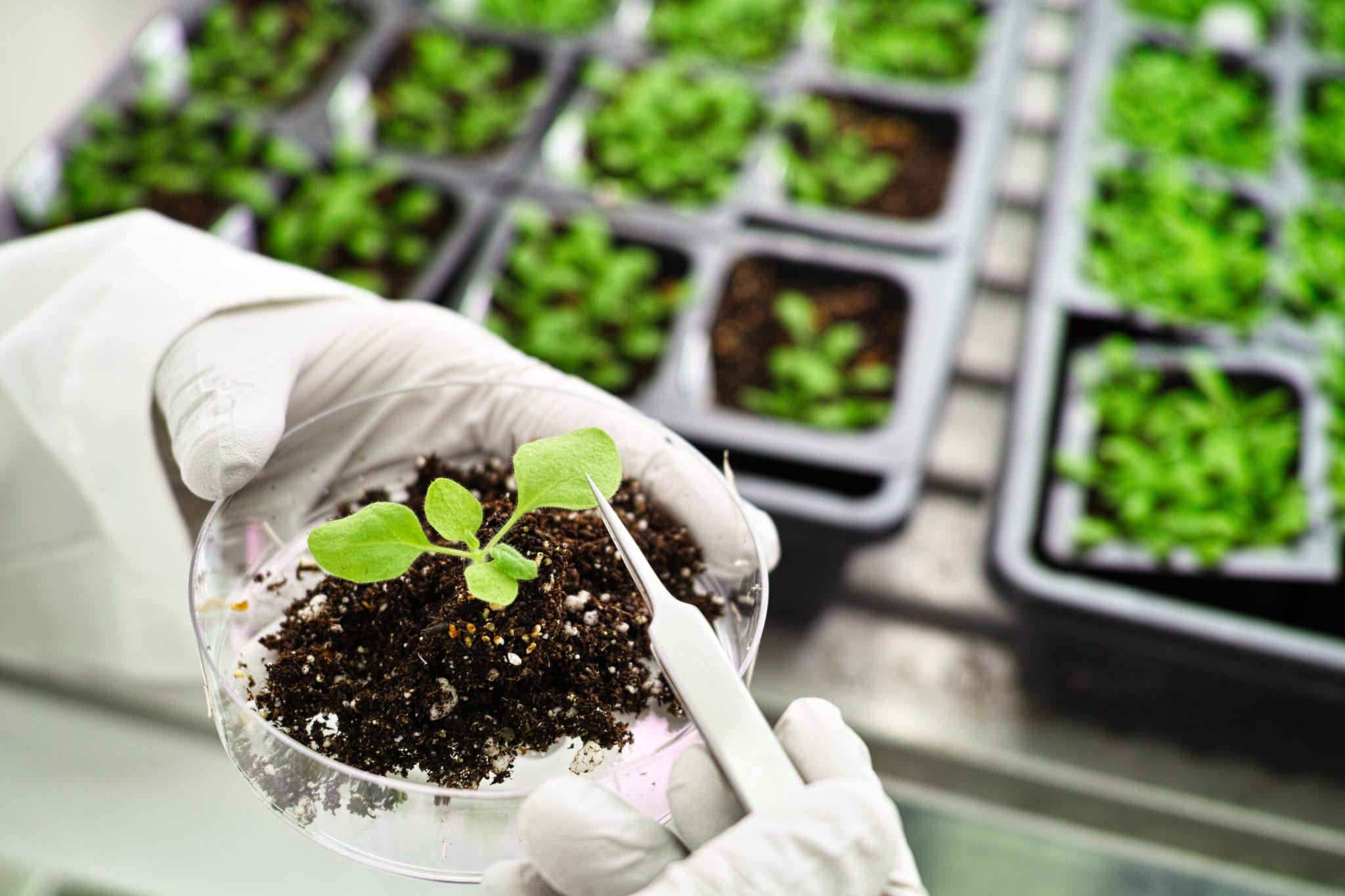
Prior to the increased private sector investment in AgTech, the growth in the yield was not comparable to the rising need. To rectify this and increase yield, AgTech investors recognized that it is equally important to invest in the yield as it is on the technology that supports the agricultural industry. As Jaruzelski and Staack said, the technological advances in AgTech are increasingly focused on the crop yield and today, scientists are working on ways to “improve the natural characteristics of crops to make them more resistant to drought, pests, and weeds, and [to] boost their photosynthetic efficiency to make them grow faster. Companies are already developing applications of the technology to improve drought resistance for crops and to improve livestock resistance to diseases, such as African swine fever.”
Alongside impacting the genetic component and resistibility of crops, the use of “sensor technology, geo positioning, and big data [sic] also enable significant increases in crop and livestock yields” showing the direct impact innovation has on output in AgTech. Since the AgTech ecosystem is so ripe for disruption, it makes the impact of almost any technology tremendous on all output and yield. From utilization of drones to monitor and plant, to the use of technology to adjust soil and water mineral levels, the private sector impact on crop yields is felt and will likely be credited with ensuring the world does not encounter a global food crisis by the time the population reaches the double digits (in billions).
When Consumer Awareness Coincide with Private Sector R&D
While companies may look at the investment in AgTech as a purely financial one (although hopefully many also want to save the world in the long run), the impact of AgTech can also be felt on a consumer level. Today, consumers are more aware of the impact that agriculture has on nature and the importance of the quality and composition of the foods they buy and consume. This increased awareness of health, sustainability, and impact on the global ecosystem has led to an increase in the emphasis the private sector places on sustainable AgTech.
“In addition to improving sustainability, players across the agricultural supply chain are also keenly interested in creating transparency and trust about their sustainability efforts. For example, major food companies and retailers are making public sustainability commitments to improve their environmental footprints.”
The rising importance consumers place on sustainability and eco-friendly farming habits has increased their willingness to pay for premium products and has, as a result, pushed companies to introduce sustainable practices in their companies; many of which are based on modern technology and innovation, water conservation, energy conservation and more. Sustainability in the agricultural ecosystem extends beyond harvest and crops and is making its way into the dairy and meat industries. In the meantime, we’re excited to see the rise of private sector spending in AgTech since the positive impact is already felt and will continue to be felt in the years to come.
While the AgTech industry still faces many challenges, the growth potential is there – if only the private sector continues to nurture it!
_____________________________
Primary Reference:
Cornell University, INSEAD, and WIPO (2017): The Global Innovation Index 2017: Innovation Feeding the World, Ithaca, Fontainebleau, and Geneva, Chapter 3.
